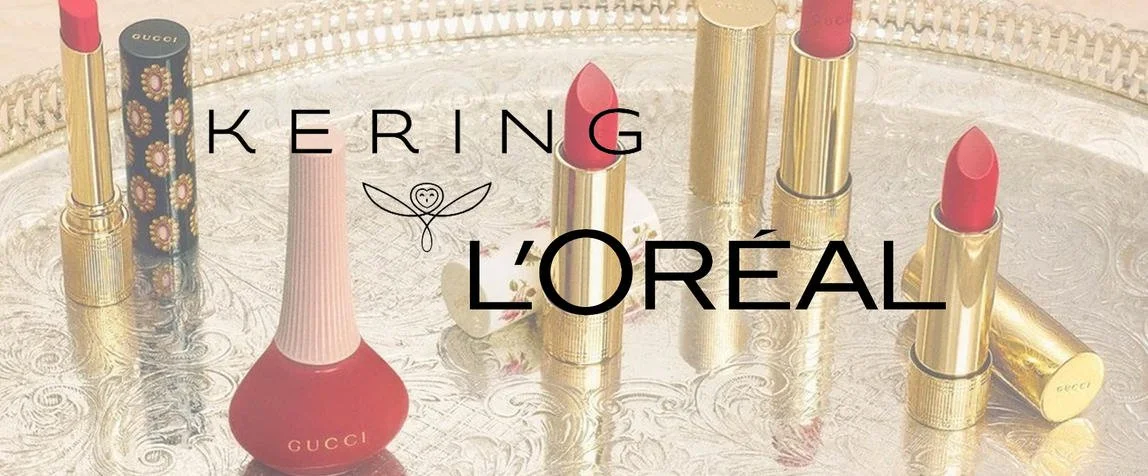
Kering is reportedly selling its $4B beauty division to L’Oréal
The boundaries between fashion and beauty remain porous, but this deal indicates that for some houses, divergent businesses (fashion vs beauty) may be less synergistic than previously believed.
Kering is making waves in the luxury industry once again. The French fashion conglomerate — parent company to Gucci, Balenciaga, Bottega Veneta and Saint Laurent — has agreed to sell its €4 billion beauty division to L’Oréal. The deal includes the ultra-luxury fragrance house Creed and long-term beauty licences for Gucci, Balenciaga and Bottega Veneta. For a group that only launched its cosmetics arm in 2023, this dramatic exit signals a strategic pivot back to core fashion at a time when the global luxury market is under pressure. As beauty consolidation accelerates, the transaction raises critical questions: will L’Oréal dominate the future of prestige fragrance, and what does this mean for Kering’s long-term brand strategy?

A Strategic Reset: Kering Sells Its Beauty Division to L’Oréal
In October 2025, Kering agreed to sell its beauty division — including the niche fragrance house Creed and long-term licensing rights for brands such as Gucci, Balenciaga and Bottega Veneta — to L’Oréal for approximately €4 billion ($4.7 billion).
This is one of the most decisive and public strategic pivots under new CEO Luca de Meo, signalling that Kering’s next chapter will focus squarely on its heritage fashion houses rather than diversified beauty ambitions. The Guardian+1
The Backdrop: Why the Move?
Kering’s push into beauty began in 2023 with its acquisition of Creed for €3.5 billion, designed to reduce reliance on Gucci and expand into higher-margin fragrance and cosmetics. Le Monde.fr
The move faltered: the beauty division posted a €60 million operating loss in H1 2025, while Gucci, Kering’s crown jewel, faced slowing growth in critical markets like China. The Guardian+1
At the same time, Kering carried a heavy debt load: net debt at ~€9.5 billion plus other lease liabilities. The sale thus becomes a financial necessity as much as a strategic choice. Reuters+1
What Exactly is Changing?
L’Oréal acquires the beauty arm, Creed, and takes exclusive rights for 50 years to develop beauty and fragrance products for Gucci, Balenciaga and Bottega Veneta post-Coty’s existing licence (ending 2028). The Guardian+1
Kering will continue to earn royalties from the licensed activity, meaning it retains a financial upside despite exiting direct operations in beauty. AP News
The deal is expected to close in the first half of 2026. AP News+1
The Strategic Implications
For Kering
A recalibrated focus: The company appears to be returning to its core strength of fashion houses, shedding the lower-scale beauty operations that lacked critical mass.
Deleveraging: The deal provides short-term financial relief, allowing Kering to reduce debt and redirect capital toward its main brands.
Signal to the market: De Meo is communicating that this era will be about discipline, focus, and clarity in brand portfolios.
For L’Oréal
Expansion of its luxury footprint: This acquisition is L’Oréal’s largest to date and cements its status in the ultra-premium beauty and fragrance market.
Access to luxury fashion-house licences: By licensing Gucci, Balenciaga and Bottega Veneta, L’Oréal gains entrée to high-margin segments and brand equity.
New wellness frontier: The companies signalled collaboration in “wellness and longevity” — a nod to the evolving frontier of beauty beyond cosmetics. L'Oréal
Broader Takeaways: What This Means for Luxury & Beauty
The boundaries between fashion and beauty remain porous, but this deal indicates that for some houses, divergent businesses (fashion vs beauty) may be less synergistic than previously believed.
Scale matters. Niche beauty brands face high fixed costs and scale limitations; luxury conglomerates may find more predictable returns sticking to core competencies.
The prestige fragrance/beauty business is consolidating. Independent, ultra-luxury scent houses are becoming ever less common. Linkages to large platforms with global distribution are increasingly the norm.
Market conditions (China slowdown, higher debt, investor pressure) continue to drive strategic realignment in luxury.
The Risks & Open Questions
Will Kering’s fashion houses pick up the slack? Focusing on the core is wise, but execution matters — the Gucci slowdown shows this won’t be automatic.
Licensing rather than owning: Kering will depend on royalties and the performance of third-party operations — less control, but also lower risk.
For L’Oréal, integration becomes critical. Managing luxury fragrance licences and preserving equity demands sensitivity; if mismanaged, brand dilution is a real risk.
Wellness is an interesting gambit, but it remains a nascent category — its success is far from guaranteed.
Final Word
The sale of Kering Beauty to L’Oréal is more than a financial transaction — it’s a reset of strategy. For Kering, the divestment provides fresh capital to strengthen its fashion houses and reduce debt, while removing the risk of building a beauty arm from scratch. For L’Oréal, it is a decisive expansion of its luxury beauty portfolio, giving it access to some of fashion’s most powerful names. As the deal moves toward completion in 2026, one thing is clear: the lines between fashion and beauty are being redrawn. The winners will not be those who diversify the widest, but those who focus the sharpest.
In a market where growth is harder and brand gravity matters more than ever, the winners may not be those who diversify widely but those who double-down smartly.
Sources: BOF , Wall Street Report , L’Oréal , Reuters , Forbes
OUR PRODUCTS: